Jul 31, 2026Buying Guides
Why Some Stove Fans Work Better Than Others: A B2B Buyer’s Guide
Learn why similar stove fans perform differently and what retailers, distributors and e-commerce sellers should compare before sourcing.
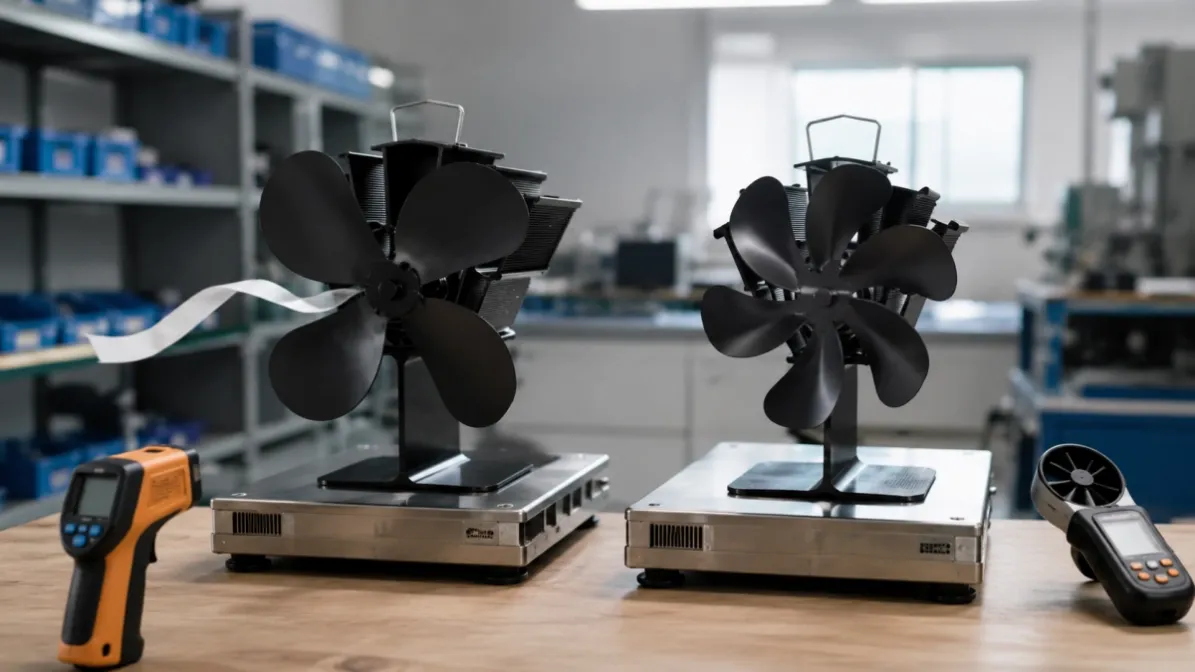
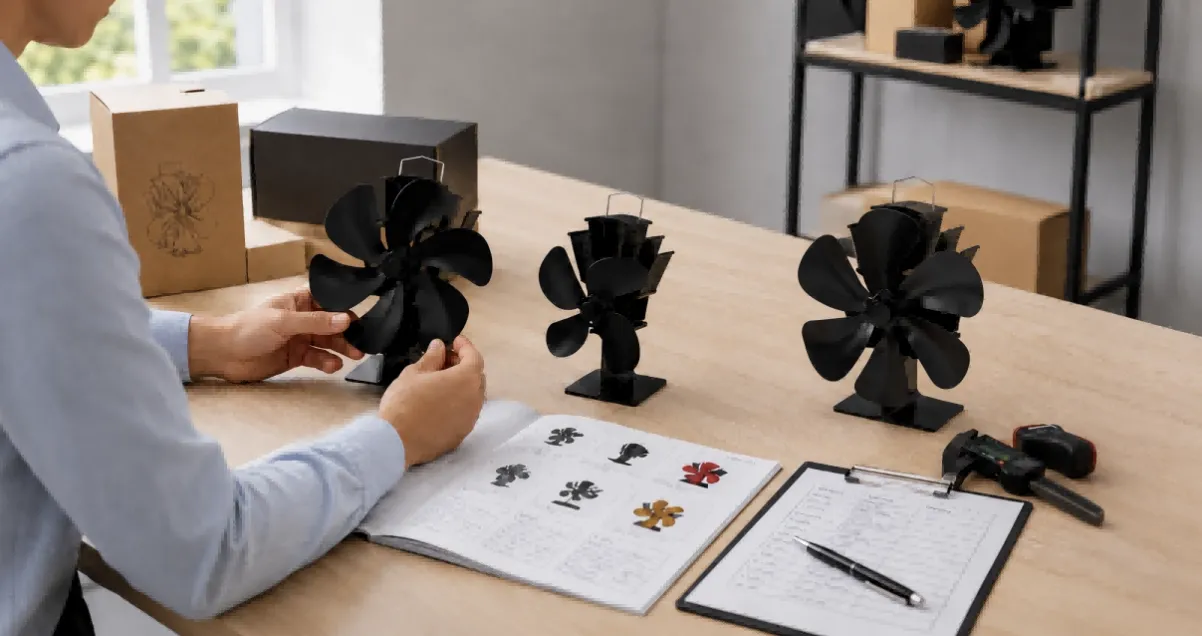
Two heat powered stove fans can look almost identical but deliver very different results. Performance depends on the thermoelectric module, motor, heat sink, blade design, balance, operating temperature and how well the model matches the end user’s stove. For B2B buyers, comparing these factors is more useful than comparing blade count or unit price alone.
Retailers and online sellers often find products with similar black aluminium bodies, similar blade sizes and almost identical sales claims.
However, end-user feedback may be completely different.
One fan may start smoothly, remain quiet and work through a full heating season. Another may rotate slowly, develop vibration or stop after several weeks.
So why do some stove fans work better than others?
The answer is not one single feature. It is the way several components and operating conditions work together.
Similar Appearance Does Not Mean Similar Performance
Most heat powered stove fans use the same general principle.
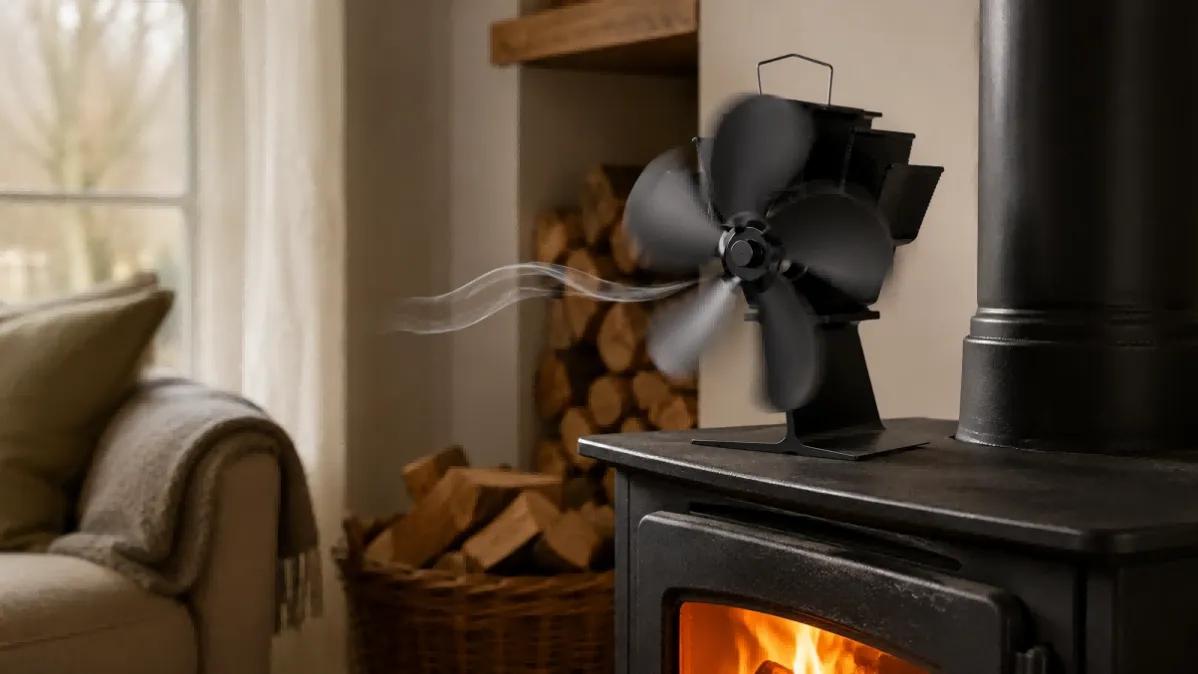
Heat enters the base, while the upper heat sink remains cooler. A thermoelectric module uses this temperature difference to generate electricity, which powers the motor and turns the blades.
Because the operating principle is similar, many models can look interchangeable.
But small differences in component quality and design can affect:
- start-up behaviour;
- useful airflow;
- noise;
- vibration;
- overheat resistance;
- long-term reliability.
This is why B2B buyers should avoid selecting a product only because it has more blades, a lower price or a more decorative body.
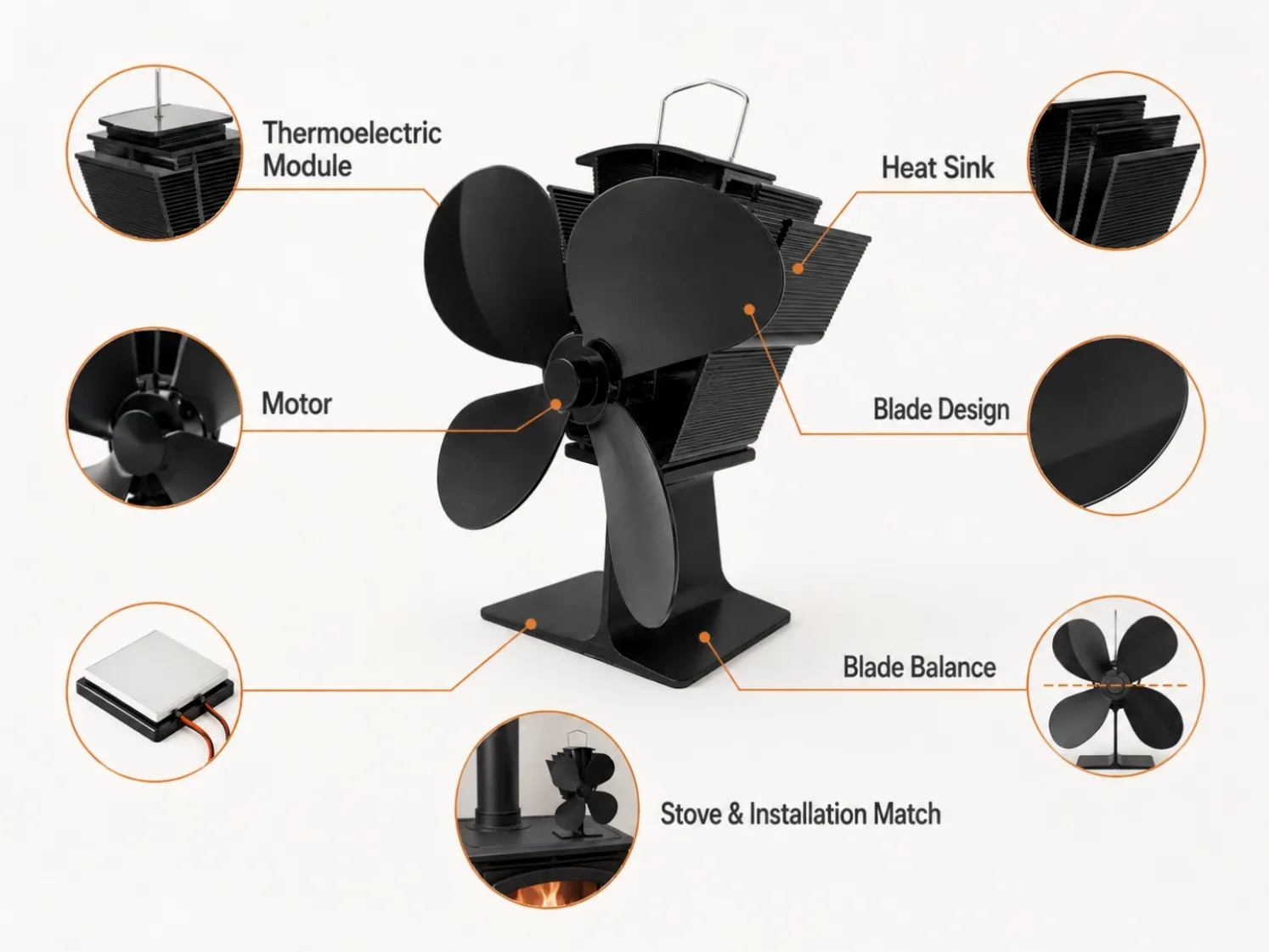
The Six Factors That Affect Stove Fan Performance
1. Thermoelectric Module Quality
The thermoelectric module converts the temperature difference into electrical power.
Its quality influences:
- how consistently the fan starts;
- how much power reaches the motor;
- how it handles repeated heating and cooling;
- how long it continues working.
A fan may perform well during a short sample demonstration but fail later if the module cannot tolerate regular heat cycles.
B2B buyers should ask whether the module has been tested through repeated heating and cooling, rather than relying only on a start-up temperature claim.
2. Motor Stability
The motor affects speed, airflow, noise and product life.
A low-cost motor may initially appear acceptable but later develop:
- slower rotation;
- humming;
- clicking;
- shaft movement;
- complete failure.
A useful supplier evaluation should include continuous-operation testing and noise checks after extended use.
3. Heat Sink Design
The heat sink is not only an external design feature.
It must release enough heat to maintain a useful temperature difference between the hot base and the cooler upper section.
If heat dissipation is poor, the product may:
- generate less electrical power;
- produce weaker airflow;
- operate under greater thermal stress;
- experience shorter component life.
The size, surface area, fin arrangement and airflow around the heat sink all matter.
4. Blade Design and Motor Matching
More blades do not automatically create more airflow.
Performance also depends on:
- blade diameter;
- blade angle;
- blade shape;
- blade weight;
- motor output;
- operating temperature.
A six-blade model can perform well when the motor and blades are properly matched. However, adding more or heavier blades can also increase motor load.
This is why retailers should not describe six blades as automatically better than four or five.
5. Blade Balance
Small differences in blade shape or alignment can create vibration.
A poorly balanced fan may:
- make more noise;
- place extra load on the motor;
- move unevenly;
- develop problems after transport.
Blade balance must be controlled during production and protected through suitable packaging.
A fan that leaves the factory correctly balanced can still arrive damaged if the blade edges are pressed against the box.
6. Stove and Installation Match
A good product can still receive a bad review if it is used in the wrong application.
Performance may vary because of:
- stove-surface temperature;
- available stove-top space;
- placement near the flue;
- room size;
- stove material;
- mounting method.
A conventional stove-top model may be suitable for a flat wood stove with enough free surface area. A compact, clamp-mounted or magnetic model may be more suitable when the top surface is limited.
Why Do End Users Experience Different Results?
Two customers can buy the same model and report different performance.
End-user situation | Likely result |
|---|---|
Hot wood stove, correct placement, small room | More noticeable warm-air circulation |
Lower-temperature stove | Slower start and weaker airflow |
Fan placed too close to the flue | Higher thermal stress or reduced cooling |
Large open-plan room | Less noticeable overall effect |
Bent blade after delivery | Noise, vibration or uneven rotation |
Customer expects electric-blower airflow | Product feels weaker than expected |
This means that product performance and product suitability must be evaluated together.
Retailers should not only ask, “Is this a good fan?”
They should also ask, “Is this the right fan for the customer’s stove and room?”
What Should B2B Buyers Compare?
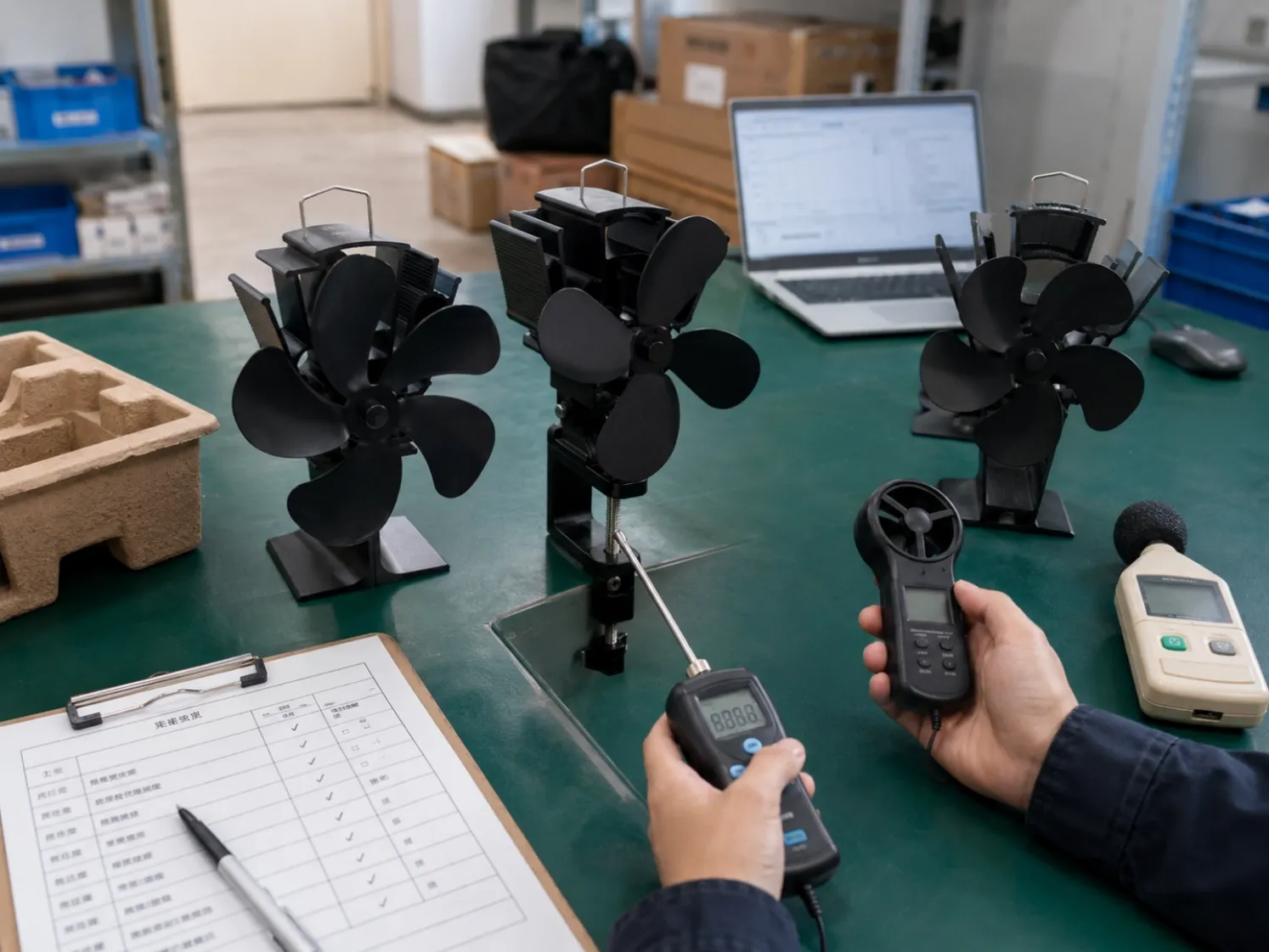
Area | What to request |
|---|---|
Start-up | Temperature at which the blades begin rotating |
Useful performance | Airflow or RPM at several stove temperatures |
Test conditions | Surface temperature, ambient temperature, distance and equipment |
Motor reliability | Continuous-run testing |
TEG reliability | Repeated heat-cycle testing |
Noise | Test distance, background noise and operating temperature |
Blade quality | Balance, alignment and shaft movement |
Heat protection | Overheat-protection design and test method |
Packaging | Blade protection and transport testing |
Compatibility | Suitable stove types, surfaces and mounting methods |
A single maximum CFM number or one short sample video does not provide enough information.
Buyers need to know under what conditions the result was produced.
How Should Distributors Build a Product Range?
A distributor does not need many nearly identical models.
A more practical range can cover different end-user situations.
Mainstream Stove-Top Model
Suitable for common wood stoves and log burners with enough flat top space.
Compact Model
Designed for smaller stoves or limited installation areas.
Clamp-Mounted or Magnetic Model
Useful where the stove top is unavailable or where the target market includes pipe-mounted and outdoor applications.
Premium or Durability-Focused Model
Suitable for customers who value longer seasonal use, lower noise and better after-sales support.
The final range should be based on:
- target country;
- typical stove type;
- expected retail price;
- sales channel;
- return risk;
- required product differentiation.
How Can Sellers Explain Product Differences Honestly?
Product pages should avoid vague claims such as:
- “super strong airflow”;
- “more blades, more heat”;
- “works on every stove”;
- “completely silent”;
- “lowest start temperature means best performance.”
Instead, sellers should explain:
- the suitable stove type;
- the recommended working conditions;
- the difference between initial rotation and useful airflow;
- the mounting method;
- the actual product dimensions;
- how performance was tested.
This helps consumers choose more accurately and gives retailers a more credible reason to offer different models.
Why Better Product Selection Reduces Returns
Many complaints begin before the product is delivered.
If the wrong model is sold to the wrong customer, even a correctly manufactured fan may receive a negative review.
Better product selection can reduce complaints involving:
- low airflow;
- late start-up;
- poor stove compatibility;
- insufficient installation space;
- noise caused by transport damage;
- unrealistic expectations.
For B2B buyers, product performance is therefore not only an engineering issue.
It directly affects reviews, customer-service costs, replacement orders and brand reputation.
Frequently Asked Questions
Do more blades make a stove fan better?
Not automatically. Blade diameter, angle, weight, motor output, balance and operating temperature all affect performance.
Why do similar stove fans have different airflow?
They may use different thermoelectric modules, motors, blade designs, heat sinks or test conditions.
Can a low start-up temperature prove that a fan performs better?
No. Starting to rotate and producing useful airflow are different performance stages.
What is the most important stove fan component?
There is no single component. The thermoelectric module, motor, heat sink and blades must work together.
What should distributors test in a sample?
Test start-up, airflow at several temperatures, noise, vibration, continuous operation, overheat protection and packaging condition.
Looking for the Right Stove Fan Mix for Your Market?
Evermark Living supports retailers, distributors, e-commerce sellers and private-label buyers with stove-top, compact, clamp-mounted and magnetic heat powered stove fan options.
Send us your target market, common stove types, price positioning and expected order quantity.
We can recommend a practical sample combination and discuss performance information, packaging and OEM options.
Request a model comparison, sample plan or B2B quotation.