Jul 31, 2026Buying Guides
Stove Fan Spinning but Not Moving Much Air? What B2B Buyers Should Check
Why does a stove fan spin without moving much air? Learn the main causes and what retailers, distributors and e-commerce sellers should check before sourcing.
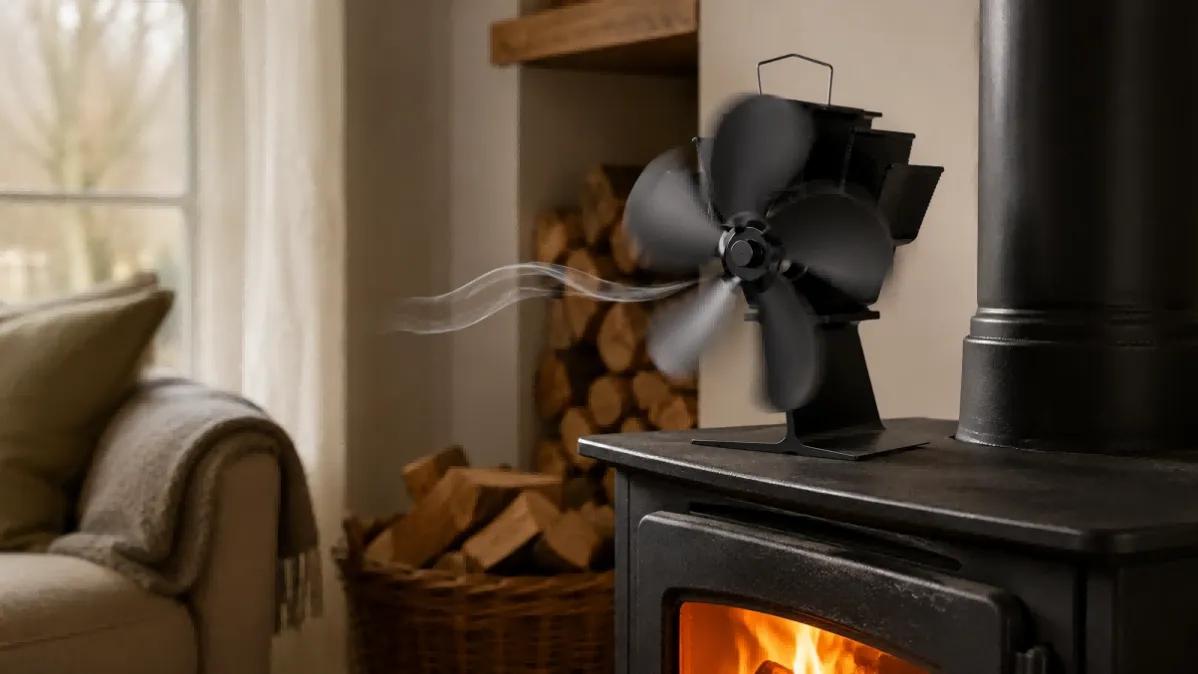
A heat powered stove fan can begin spinning before it produces useful airflow. Low stove temperature, incorrect placement, room layout, blade design and product quality may all affect the result. For retailers and distributors, clearly separating start-up temperature from effective airflow is essential for reducing complaints and returns.
One of the most common stove fan complaints is:
“The blades are spinning, but I cannot feel much air.”
For an end user, this often creates the impression that the product does not work.
For a retailer or e-commerce seller, it can result in low-star reviews, refund requests and repeated customer-service questions.
However, a spinning fan is not always a defective fan. The real issue may be the operating temperature, placement, room conditions, product selection or the expectations created by the product page.
Why Can a Stove Fan Spin Without Producing Much Air?
A heat powered stove fan uses the temperature difference between its hot base and cooler heat sink to generate electricity.
When the stove first warms up, the thermoelectric module may produce enough power to start the motor. The blades begin to rotate, but the available power may still be too low to produce noticeable airflow.
This creates two different stages:
- Start-up: the blades begin moving.
- Useful operation: the fan reaches enough speed to circulate warm air more effectively.
A low start-up temperature may sound attractive in a product listing, but it does not automatically mean strong airflow at that temperature.
For B2B buyers, the key question should not only be:
“When does the fan start?”
It should also be:
“What airflow does it produce at different stove-surface temperatures?”
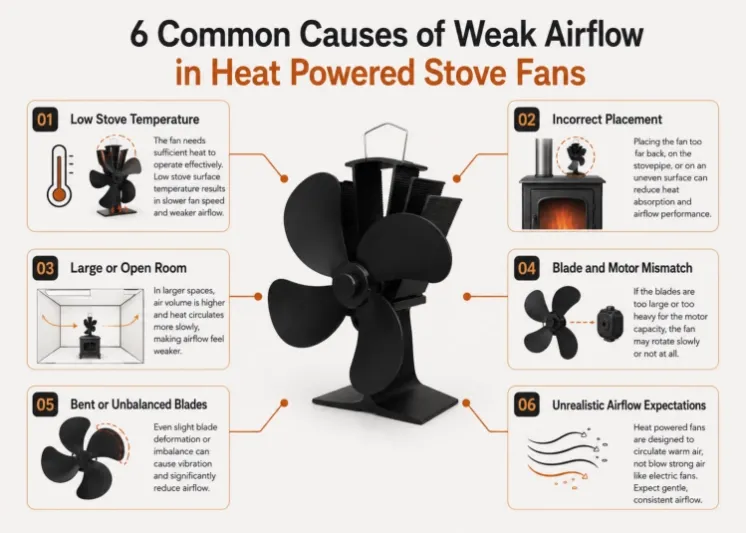
The Most Common Causes of Weak Airflow
1. The Stove Surface Is Not Hot Enough
If the stove surface is only slightly above the fan’s start-up temperature, the blades may turn slowly.
This is common with:
- some pellet stoves;
- soapstone stoves;
- stoves with insulated top surfaces;
- low-fire settings;
- installation points away from the hotter usable area.
The customer may see movement but receive limited circulation.
2. The Fan Is Placed in the Wrong Position
Placement affects both the heat entering the base and the cooler air reaching the heat sink.
Common mistakes include:
- placing the fan too close to the flue pipe;
- placing it on a cooler edge of the stove;
- blocking the rear heat sink;
- facing the fan in an unhelpful direction;
- using it on an uneven surface.
The best position is not always the hottest point. The product needs a useful temperature difference between the base and the upper cooling section.
3. The Room Is Too Large or Too Open
A compact heat powered fan may improve circulation in a small or medium room but have a limited noticeable effect in:
- large open-plan spaces;
- rooms with high ceilings;
- several connected rooms;
- poorly insulated spaces;
- rooms where the stove itself is undersized.
The product may be operating normally, but the customer expects it to move heat farther than its design allows.
4. Blade and Motor Performance Are Not Well Matched
More blades do not automatically mean more airflow.
Airflow also depends on:
- blade diameter;
- blade angle;
- blade weight;
- motor output;
- fan speed;
- dynamic balance.
A heavier blade set may create more motor load. A poorly matched design can spin visibly without delivering the expected airflow.
5. The Blades Are Bent or Unbalanced
A small amount of transport damage can affect performance.
Bent or uneven blades may cause:
- vibration;
- noise;
- reduced speed;
- uneven airflow;
- additional stress on the motor.
This is why blade protection inside the packaging is especially important for cross-border e-commerce.
6. The Listing Creates the Wrong Expectation
Some product images show a small stove fan producing powerful wind across an entire room.
This can make the consumer expect electric-blower-level airflow.
A heat powered stove fan is designed to support warm-air circulation. It is not normally intended to create a strong breeze several metres away.
What This Complaint Means for B2B Buyers
End-user complaint | Possible reason | B2B response |
|---|---|---|
“It spins but has no airflow.” | Temperature is only high enough for start-up | Publish airflow at several temperatures |
“I cannot feel the air from far away.” | Product compared with an electric fan | Explain realistic airflow expectations |
“It works only when the stove is very hot.” | Model may not suit a lower-temperature stove | Offer a tested low-start model |
“It makes noise but moves little air.” | Bent blades or poor balance | Strengthen blade QC and packaging |
“It does not warm my whole room.” | Room is too large or open | State recommended application conditions |
“It worked better after I moved it.” | Original placement was incorrect | Add a clear placement guide |
The aim is not to blame the customer.
The aim is to identify which problems should be solved through:
- better product quality;
- better model selection;
- better instructions;
- better packaging;
- more realistic marketing.
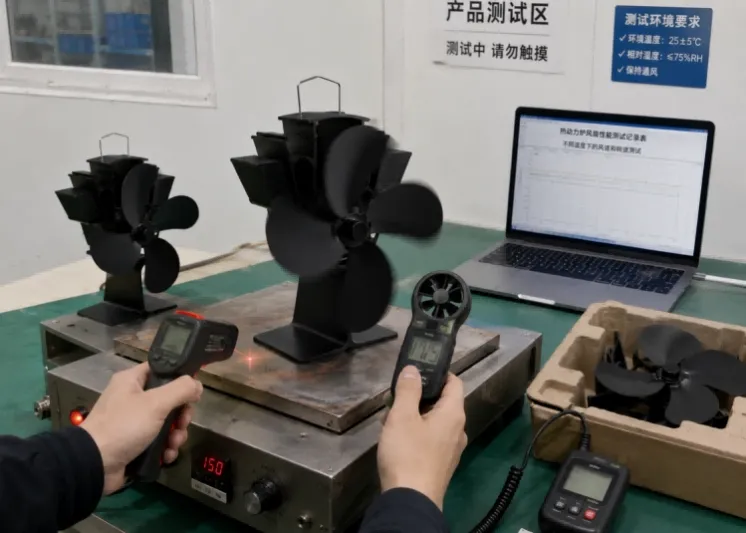
What Should Retailers Ask a Supplier?
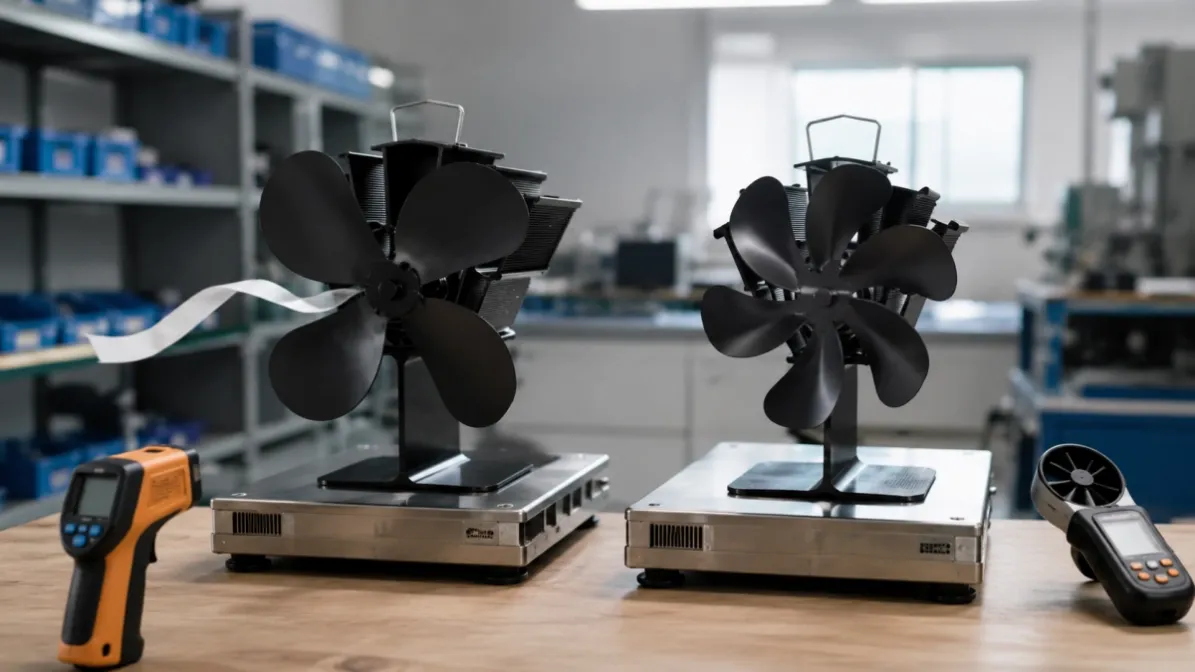
Before adding a stove fan to a product range, ask for more than one maximum airflow figure.
Ask for Temperature-Based Performance
Request:
- start-up temperature;
- RPM at several temperatures;
- airflow at several temperatures;
- ambient room temperature;
- test distance;
- measurement equipment.
A temperature-to-airflow comparison is more useful than a single unexplained CFM claim.
Check the Motor and TEG Module
Ask whether the motor and thermoelectric module have been tested through:
- continuous operation;
- repeated heating and cooling;
- normal operating temperatures;
- higher-temperature conditions.
A short sample video cannot confirm long-term reliability.
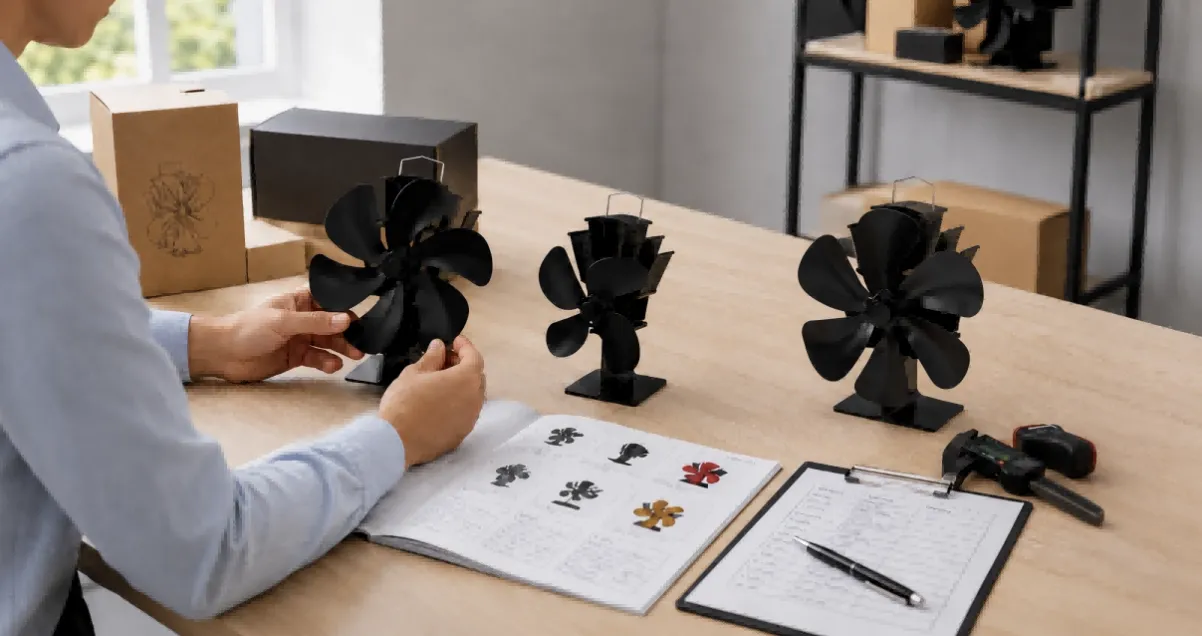
Inspect Blade Balance
During sample testing, check whether the fan:
- rotates smoothly;
- vibrates;
- produces clicking sounds;
- has equal blade spacing;
- arrives with any bent edges.
Check the Packaging
The internal tray should prevent the product from moving and keep pressure away from the blades.
For e-commerce sellers, protective packaging is part of product performance because transport damage can directly create airflow and noise complaints.
Which Product Direction Fits Different Applications?
Customer application | Product direction |
|---|---|
Standard wood stove with enough top space | Mainstream stove-top fan |
Small log burner | Compact stove-top fan |
No suitable flat stove-top area | Clamp-mounted or pipe-mounted model |
Compatible vertical steel surface | Magnetic model |
Pellet or lower-temperature stove | Model tested for lower-temperature operation |
Large room or cabin | Larger model or realistic multi-fan guidance |
Offering different installation structures can reduce the need to force one universal model into every stove application.
How Can E-Commerce Sellers Reduce Complaints?
Product pages should clearly explain:
- start-up is not the same as full airflow;
- actual dimensions and blade diameter;
- recommended stove types;
- suitable operating conditions;
- correct placement;
- realistic room applications;
- difference from an electric blower.
A useful product page should also include:
- a stove-top temperature guide;
- correct-versus-incorrect placement images;
- a real-size product image;
- a short airflow demonstration;
- a troubleshooting section.
Avoid exaggerated wind graphics. They may attract clicks, but they also increase disappointment after delivery.
Is Weak Airflow Always a Product Defect?
No.
Weak airflow may result from low stove temperature, incorrect placement, an unsuitable room or unrealistic expectations.
However, it may indicate a product problem when:
- the fan remains very slow at a suitable temperature;
- the motor makes abnormal noise;
- the blades wobble;
- the unit stops repeatedly;
- another tested sample performs much better under the same conditions.
This is why B2B sample testing should use controlled and repeatable conditions.
Frequently Asked Questions
Why is my stove fan spinning but not moving much air?
The stove may only be hot enough to start the blades, not hot enough to produce useful airflow. Placement, room size, blade design and product quality may also affect the result.
Does faster spinning always mean more airflow?
Usually faster rotation can increase airflow, but blade diameter, angle, shape and balance also matter.
Are six blades better than four blades?
Not automatically. The blade set must be matched to the motor and operating temperature.
Can placement improve stove fan airflow?
Yes. The fan needs heat at the base and cooler air around the heat sink. Incorrect placement can reduce performance.
What should B2B buyers test in a stove fan sample?
Test start-up, airflow at several temperatures, noise, vibration, blade balance, continuous operation and packaging protection.
Need Clearer Stove Fan Performance Data?
Evermark Living supports fireplace retailers, distributors, e-commerce sellers and private-label buyers with stove-top, compact, clamp-mounted and magnetic stove fan options.
Send us your target market, common stove types and preferred product positioning.
We can provide:
- suitable model recommendations;
- sample combinations;
- airflow and operating-condition discussions;
- packaging and private-label options.
Request a stove fan sample plan or B2B model recommendation.