Oct 6, 2026Home Heating Accessories
How Many Blades? Choosing Stove Fan Blade Counts for Your Catalog
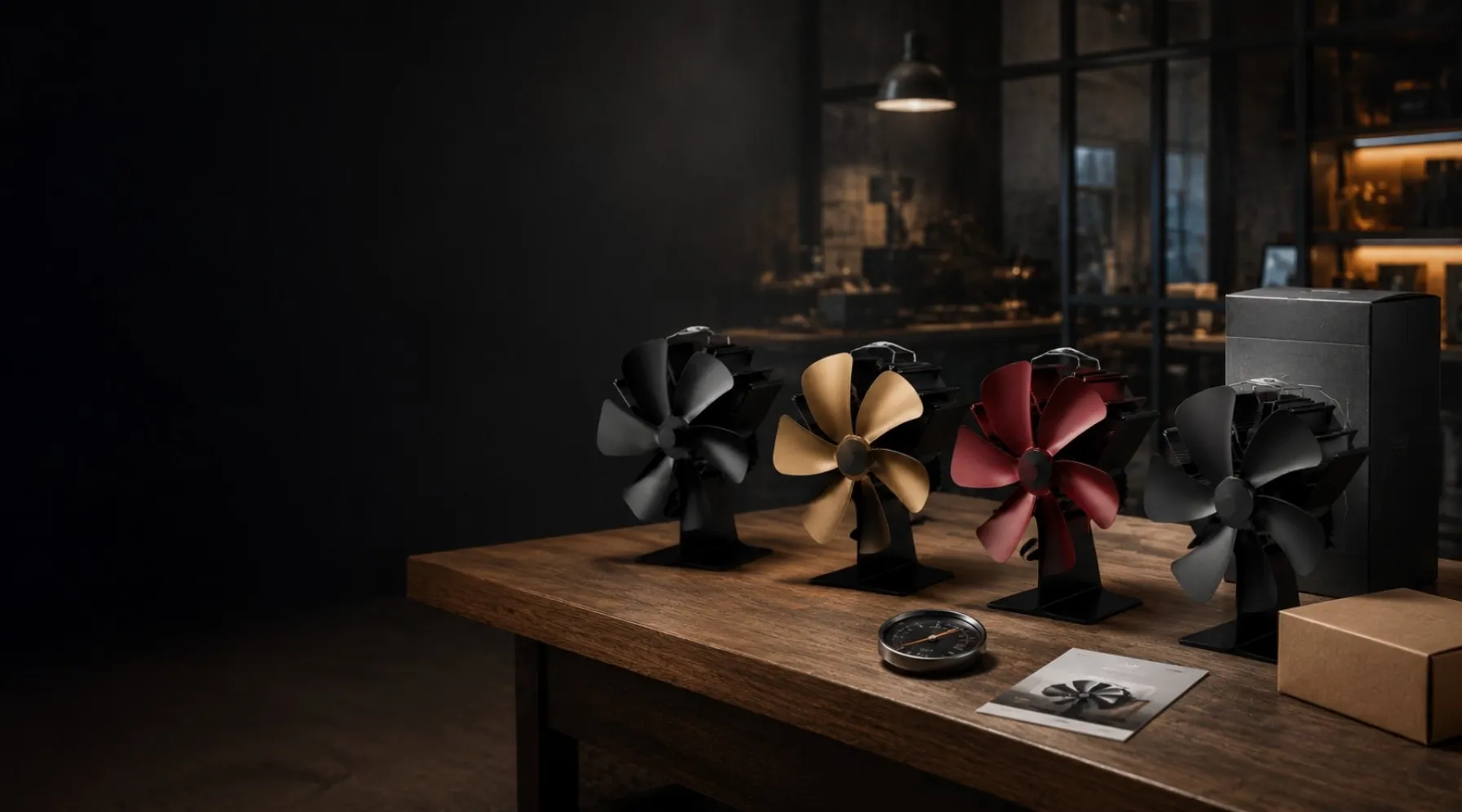
Four, five or six blades — plus dual-head, butterfly, crown and pipe-mounted styles. How to build a stove fan range across airflow, quietness, price band and shelf width.
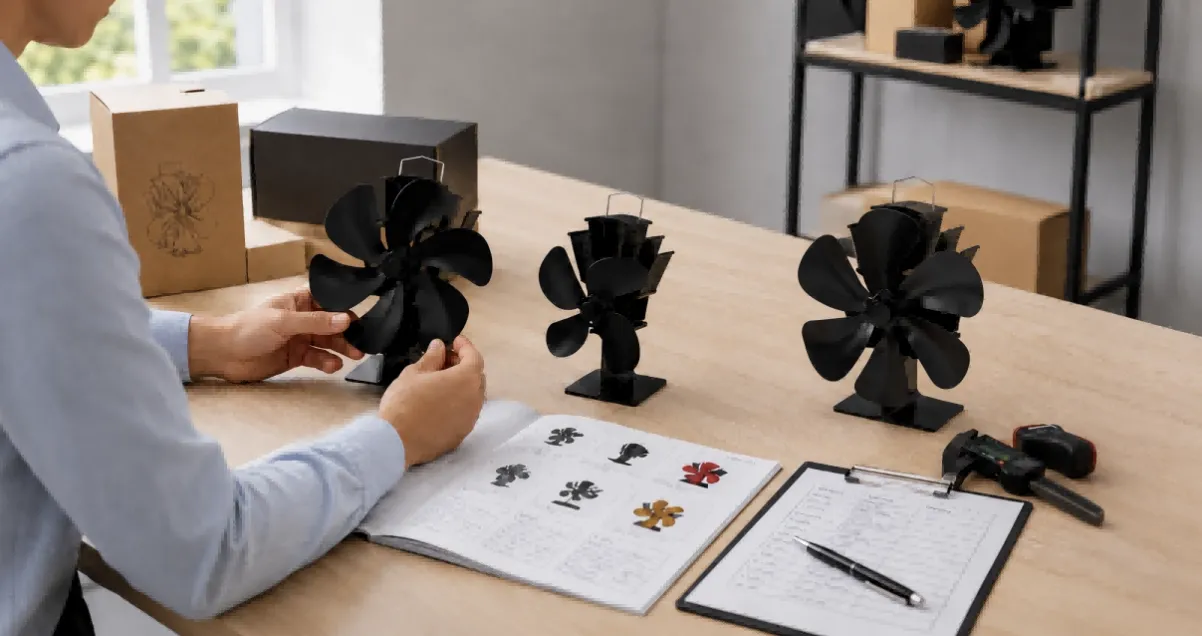
At the trade table, the stove fan conversation has moved on. Retail buyers no longer ask whether heat powered stove fans sell — they ask how many versions of the product a brand should carry, and at which price points. That makes blade count a catalog decision before it is a technical one. Blade count is the most visible difference between two fans side by side on a shelf, and it is the shorthand buyers use to slice a supplier's range. Here is how to build that range deliberately.
Why Blade Count Comes First in Range Planning
To a shopper scrolling a marketplace grid or walking a store aisle, every stove fan is a small metal propeller on a base. What separates the listings at a glance is theblade count— it is printed on the pack, it structures the category tree in supplier catalogs, and it gives buyers an easy slot to fill: "I need an entry option, a mid option and a 6-blade." A range built around clear blade-count tiers lets buyers place your products on their shelf ladder instantly. A range that is not built that way makes every model a conversation.
The Core Ladder: 4, 5 and 6 Blades
These three counts are the backbone of a stove fan catalog, and each sits at a deliberate position on it:
4-blade — the volume core.The mainstream silhouette most shoppers picture when they think of a stove fan, balancing air-moving presence with a quiet-operation story at a mid price band. Most catalogs anchor here.
5-blade — the first upgrade step.Positioned toward stronger air movement, one price band up, aimed at shoppers trading up from the entry tier.
6-blade — the top of the ladder.The fullest blade circle in the lineup, carrying the strongest air-moving positioning and the highest price band among standard models.
As blade count climbs, the merchandising story shifts fromcompact and quiet toward air-moving presence, and the price band steps up with it.
Dual-Head and 2-in-1: Features That Widen the Range
Above and beside the blade ladder sit two feature styles that solve different range-planning problems:
Dual-Head — the halo listing.Two blade assemblies on a single base give a catalog a conversation piece: the model that demos well in showrooms, looks different from every competitor grid and anchors the top of the price ladder.
2-in-1 (stove top / magnetic dual use) — the SKU saver.One model that stands on a flat stove surface or attaches magnetically covers two mounting preferences without adding a second SKU — the efficient choice for lean private-label programs watching their line count.
Butterfly and Crown: Silhouettes That Win the Gift Shelf
Butterfly and Crown styles compete on shape rather than blade count. Both read as decorative objects first, which changes where they belong in a catalog:
Butterfly— a compact, sculptural profile that stands out in marketplace thumbnails and suits counter displays and gift tiers.
Crown— an ornate silhouette with clear premium-gift positioning, a natural fit for holiday programs and boxed gifting.
Shape-led styles let a brand win shelf attention without entering a blade-count arms race — useful when the rest of the range is deliberately standard.
Pipe Mounted: The Second Mounting Format
Apipe-mounted fanclips to a flue pipe instead of standing on the stove surface. It is not a blade-count play — it is a mounting-format play. Carrying at least one pipe-mounted model makes a range read as a complete program rather than one design repeated in several blade counts, and it gives store buyers an alternative mounting choice alongside the standing models. One SKU is usually enough to close that gap.
Mapping the Styles to Your Range Architecture
Pull the four buying dimensions together — airflow presence, quiet operation, price band and shelf width — and a workable starting catalog looks like this:
Price-fighter rung:the smallest blade count in the ladder — lowest price band, smallest pack, quiet positioning.
Volume core:a 4-blade model — the mainstream anchor with the broadest repeat-order potential.
Upgrade tier:a 5-blade or 6-blade model — fuller blade circle, higher price band, stronger air-moving story.
Halo and gifting:a Dual-Head or Crown model — top price band, display and holiday duty.
Coverage:a 2-in-1 and one Pipe Mounted model — two mounting formats with minimal added line count.
That is a five-SKU core spanning three price bands: small enough to manage, wide enough to fill a category slot from entry to halo, and built entirely from standard tiers.
Talk to Evermark Living
Evermark Living, a Foshan-based supplier serving B2B buyers worldwide, offers stove fans across the full style ladder above —4, 5 and 6 blade models plus 2-in-1, Dual-Head, Pipe Mounted, Butterfly and Crown styles— with OEM branding and custom packaging available across the line.Send us your target price bands and the tiers you want to trialthrough our contact page, and we will return a recommended blade-count matrix with samples for your shortlist.