Oct 6, 2026Buying Guides
The Q4 Sourcing Calendar: Order Deadlines for Pizza and BBQ Stock
A backward-planning calendar for Q4 pizza and BBQ stock: sampling, the 20–35 day OEM window, freight and clearance buffers, and when each step must happen before your shelf date.
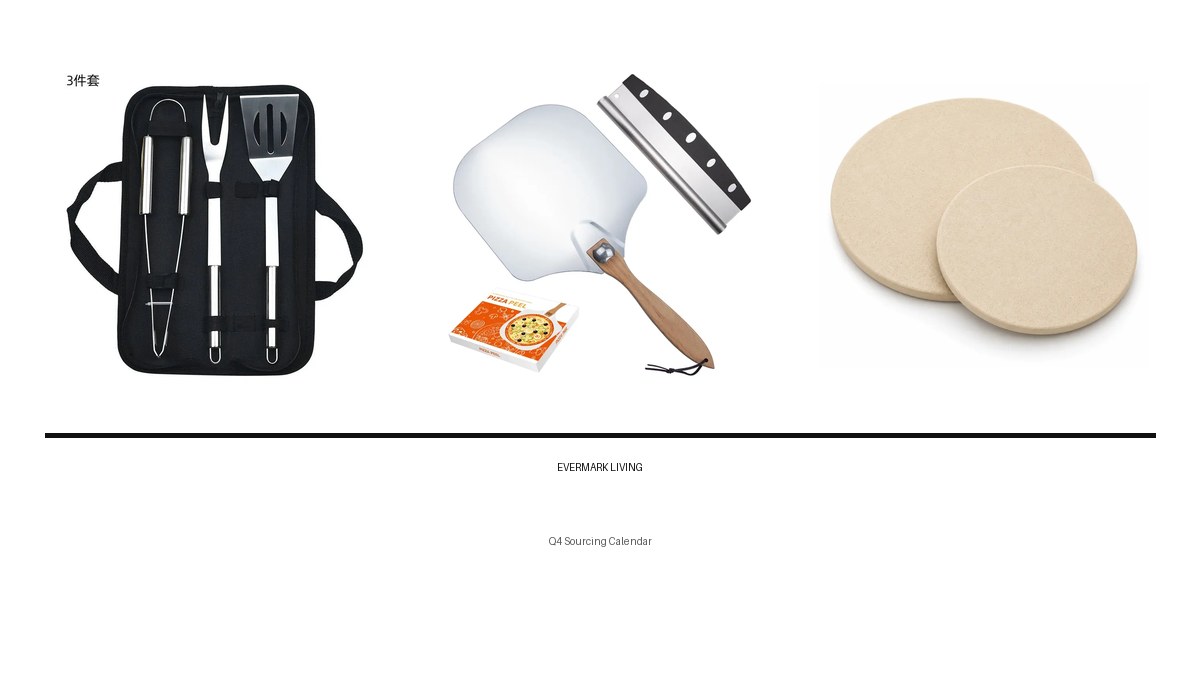
Every autumn the same scenario plays out somewhere in the outdoor-cooking category: a buyer finalizes a pizza gift set or a BBQ tool program late in the season, asks for delivery before the holidays, and hears an honest "no." The product was never the problem — the schedule was. Demand for pizza tools and grill accessories in the fourth quarter is predictable, centered onBlack Friday promotions and Christmas gifting. What separates the brands that capture that demand from the brands that miss it is not taste or budget. It is a calendar, worked backwards from the shelf date. This article is that calendar, expressed in relative weeks so it works for any market and any year.
Work Backwards From the Shelf Date
The only fixed point in Q4 sourcing is the day your stock must be sellable — on store shelves, in a warehouse feeding e-commerce, or both. Everything else is counted back from it, stage by stage:
Inquiry and selection— define the SKUs, shortlist suppliers, request quotes and lead times.
Sampling and confirmation— approve samples, specifications, logo placement and packaging; get written confirmation.
OEM production—20–35 days after confirmation, roughly three to five weeks.
Freight, customs and intake— a buffer built from your forwarder's quoted transit time, plus clearance and warehouse receiving.
Shelf date— stock sellable, listings live.
Two rules keep the chain honest. First, nothing downstream of confirmation is reliable until a supplier's written confirmation and a forwarder's quote both exist. Second, the stages feed each other: a week lost waiting for a revised sample is a week lost at the dock.
The Production Window: 20–35 Days, After Confirmation
Production is the block buyers know best and still mis-schedule. Our standard OEM window is20–35 days after confirmation— about three to five weeks in calendar planning. Two notes on how it behaves. Custom-heavy programs — new set configurations, custom packaging, laser-etched logos — tend to sit at the top of the range, while repeat orders of an existing configuration sit at the bottom. And the clock starts at confirmation, not at first contact. That single distinction is behind most missed seasons, and it is why confirmation deserves its own block on the calendar rather than a footnote.
Sampling Is Not Part of the Production Window
The most common scheduling error is treating sampling as time that overlaps with production. It does not. Before the production window opens, you need a sample in hand and an approved specification: materials and thickness, sizes, handle choice, logo placement and packaging direction. Each revision adds another round trip, and internal approval takes the time it takes. Plan sampling as its own block on the timeline, and ask suppliers at inquiry stage how long a sample round takes, in writing, so that number can enter your backwards count like any other.
Freight, Customs and Intake: The Buffer You Don't Control
Ocean transit is quoted by lane and season, so build this buffer from a real number rather than a rule of thumb. Ask a forwarder for door-to-door transit to your warehouse, then add time for customs clearance, receiving and inspection, and putaway — plus channel preparation if listings, pricing and store distribution must be ready the same week. Q4 lanes tighten as the holidays approach, which makes the buffer you choose harder to protect the later you book. In simple arithmetic: if a forwarder quotes five weeks door to door and you add one week for clearance and intake, production must finish six weeks before your shelf date.
A Relative-Week Timeline You Can Copy
Here is the count for an illustrative new pizza tool set aimed at aBlack Friday promotion, with a lane quoted at five weeks:
Week 0— shelf date; stock sellable and listings live.
Six weeks before— goods received at your warehouse (five-week lane plus one week of intake, in this illustration).
Around eleven weeks before— production complete, after five weeks at the top of the 20–35 day range.
Around fourteen weeks before— samples approved and the order confirmed in writing.
Fifteen to sixteen weeks before— inquiry sent, SKUs defined, forwarder quote in hand.
Read as a rule: a genuinely new program wants its first conversation roughlyfour months before the shelf date. The count also forgives less than it used to — a program that slips past its Black Friday slot can still sell into the Christmas gifting window, but the promotional placement is gone. Already late? A restock of an existing configuration shortens the chain: confirmation follows quickly, sampling can drop out entirely, and you can plan on the low end of the production window. That is the practical difference between launching a program and refilling one.
Talk to Evermark Living
Evermark Living is a Foshan-based supplier of pizza tools, BBQ accessories and gift-set programs for B2B buyers, withOEM production 20–35 days after confirmation, low MOQs for first orders and sample support before you commit.Send us your target shelf date and your marketthrough our contact page, and we will return a production timeline counted backwards from that date, the pizza and BBQ catalogs, and a sample quotation for the SKUs you have shortlisted.