Jul 30, 2026Buying Guides
Do Heat Powered Stove Fans Really Work? A B2B Buyer’s Guide
See what end users expect from heat powered stove fans and what retailers, distributors and e-commerce sellers should check before sourcing.
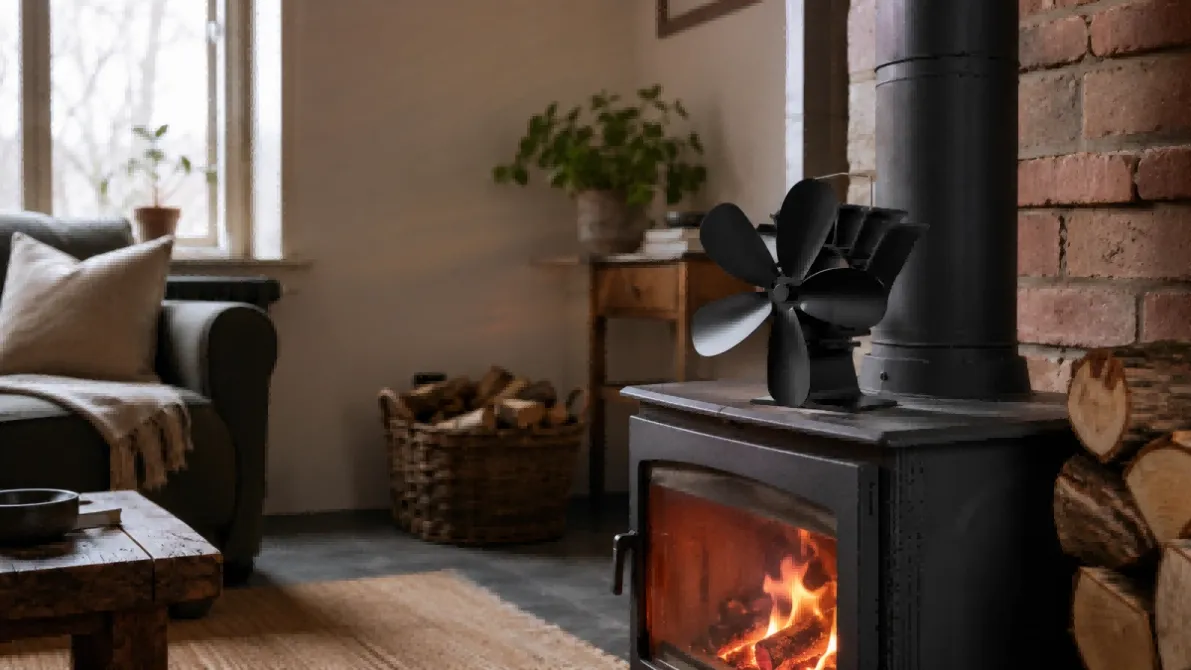
Heat powered stove fans can help move warm air away from a wood stove, but they do not create extra heat or perform like electric blowers.
Their effectiveness depends on stove temperature, fan placement, room layout and product quality.
For B2B buyers, realistic product information and correct model selection are essential for reducing returns and negative reviews.
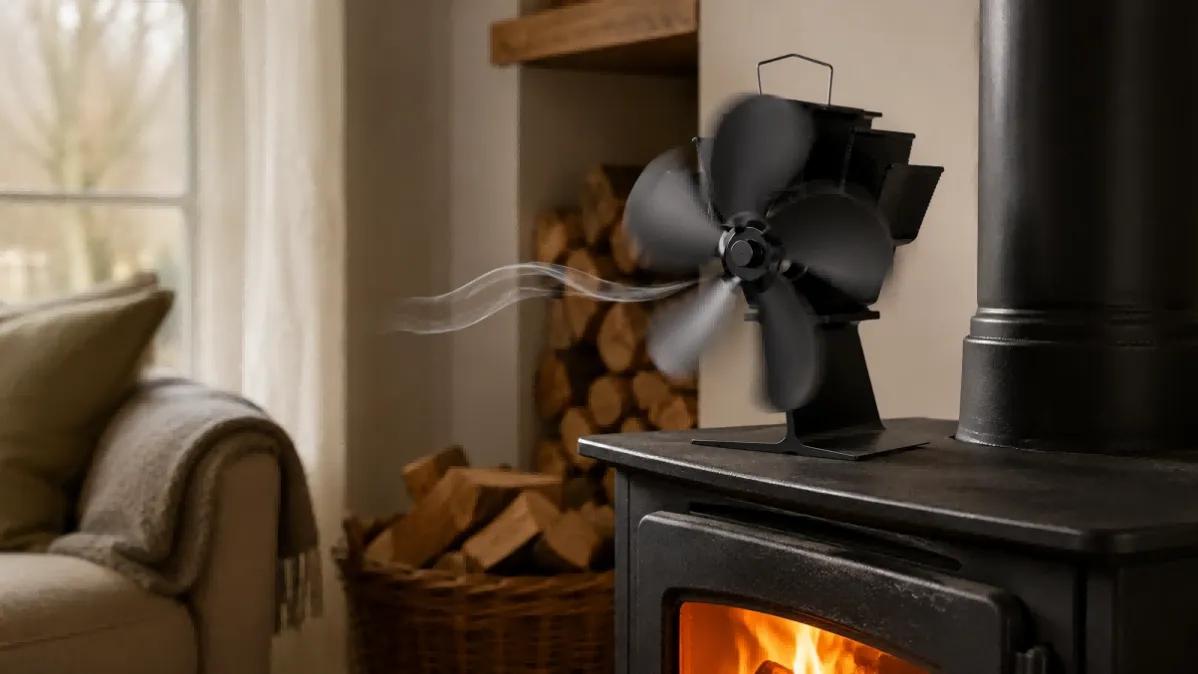
Heat powered stove fans are popular accessories for wood stoves, log burners, cabins and some outdoor heating applications. They operate without batteries or wall electricity and start automatically as the stove heats up.
However, customer reviews are often divided.
Some users say the room feels warmer and more comfortable. Others say the fan spins but produces little noticeable airflow.
For fireplace retailers, distributors and e-commerce sellers, the important question is not only whether stove fans work. It is whether the selected product matches the target customer’s stove, room and expectations.
What Do End Users Expect from a Stove Fan?
Most consumers are not buying a stove fan because of its blade count or aluminium body. They want a practical result.
End users normally expect the product to:
- move warm air away from the immediate stove area;
- reduce hot and cold spots in the room;
- operate without a power cable;
- start and stop automatically;
- run quietly;
- fit safely on the stove;
- remain reliable through the heating season.
This means consumers judge a stove fan by the experience it provides, not simply by whether the blades rotate.
A product can look attractive and start quickly but still receive poor reviews if the airflow feels weaker than expected, the fan is too small, the blades arrive bent or the motor becomes noisy after several weeks.
How Does a Heat Powered Stove Fan Work?
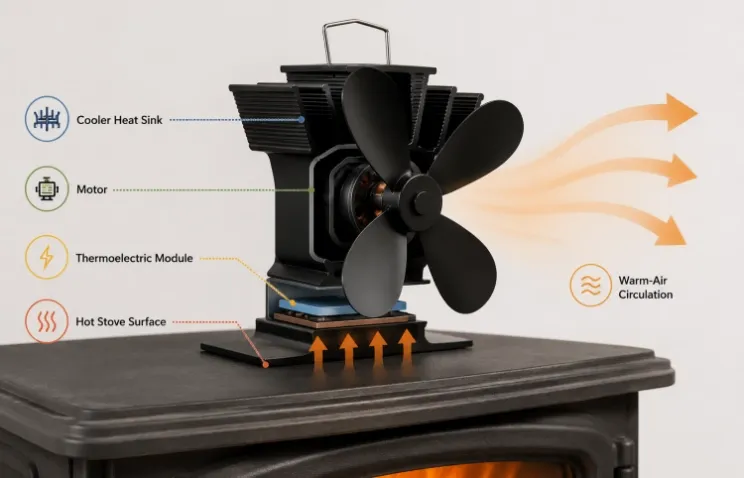
A stove fan does not create heat. The stove remains the heat source.
The fan uses a thermoelectric module positioned between the hot base and the cooler heat sink. The temperature difference creates a small electrical current that powers the motor and turns the blades.
As the stove heats up, the fan starts. As the stove cools, it slows and stops.
Its purpose is to help move some of the warm air that would otherwise remain close to the stove or rise directly above it.
This is different from an electric blower, which uses external power to create stronger forced airflow.
Why Do Some Customers Say Stove Fans Do Not Work?
The most common complaints usually come from five areas.
End-user complaint | Possible reason | B2B implication |
|---|---|---|
“It spins, but I cannot feel much air.” | Low stove temperature, limited airflow or unrealistic expectations | Publish temperature-based airflow information |
“It does not work on my stove.” | Wrong model or unsuitable stove temperature | Provide a stove compatibility guide |
“It stopped after a few weeks.” | Motor, TEG or overheating problem | Check continuous-run and heat-cycle testing |
“It is noisy or vibrates.” | Blade imbalance, motor shaft or shipping damage | Improve QC and protective packaging |
“It is smaller than expected.” | Dimensions and scale were unclear | Add real-size and stove-top comparison images |
Not every negative review means the product is defective.
Some complaints are caused by incorrect placement, unsuitable stove temperature or exaggerated marketing. Others reveal real quality issues involving the motor, thermoelectric module, blade balance or packaging.
B2B buyers need to separate these causes before selecting a product range.
What Should B2B Buyers Check?
Blade count alone is not a reliable way to compare stove fans.
Retailers, importers and private-label buyers should check the following areas.
Start-Up and Working Temperature
Ask at what temperature the blades begin to rotate and at what temperature the fan produces useful airflow.
Starting to spin does not always mean the fan has reached effective performance.
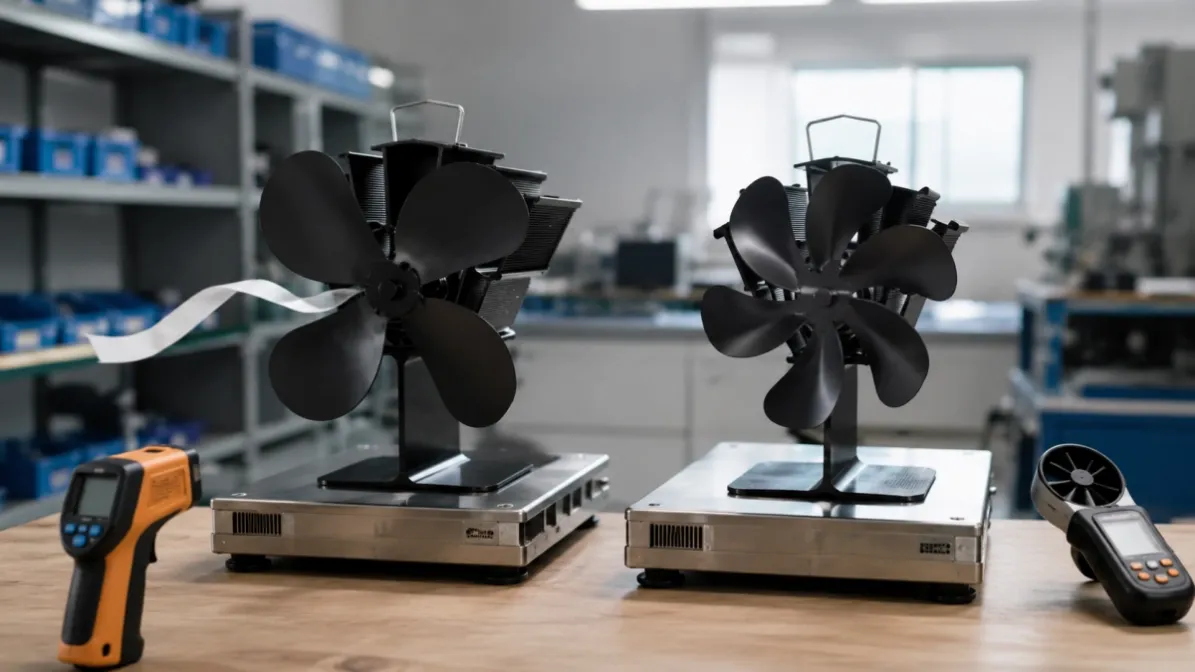
Airflow Test Conditions
A maximum CFM figure has limited value without knowing:
- the stove-surface temperature;
- the test distance;
- the ambient temperature;
- the measuring equipment.
Temperature-to-airflow data is more useful than one unexplained maximum figure.
Motor and TEG Reliability
Ask whether the motor and thermoelectric module have been tested through continuous operation and repeated heating and cooling cycles.
A short sample test cannot confirm seasonal reliability.
Blade Balance
Bent or unbalanced blades can cause noise, vibration and additional motor stress.
Blade inspection and protective packaging are especially important for e-commerce and cross-border shipping.
Overheat Protection
Wood-stove temperatures can change quickly. Buyers should understand how the product protects the motor and thermoelectric module from excessive heat.
Which Product Type Fits Which Application?
One universal model will not suit every stove.
End-user condition | Recommended product direction |
|---|---|
Flat stove top with enough space | Stove-top standing fan |
Small stove top | Compact stove fan |
No suitable top surface | Clamp-mounted or pipe-mounted fan |
Compatible steel or cast-iron surface | Magnetic fan |
Camping or hot-tent stove | Compact or pipe-mounted model |
Lower stove-surface temperature | Low-start model tested for that application |
A practical distributor range may begin with:
- one mainstream stove-top model;
- one compact model;
- one clamp-mounted or magnetic model;
- one premium or more durable model.
The final selection should reflect the main stove types, retail price and customer expectations in the target market.
How Can Sellers Reduce Returns and Negative Reviews?
Many complaints can be prevented before the customer places an order.
Product pages should clearly show:
- full product dimensions;
- blade diameter and base size;
- the fan installed on a real stove;
- recommended stove types;
- working-temperature guidance;
- correct and incorrect placement;
- realistic airflow expectations;
- what the product can and cannot do.
Avoid showing a small heat powered fan producing powerful wind across a large room. This creates the wrong expectation.
Packaging should also hold the product securely and prevent pressure on the blade edges. A slightly bent blade may lead to noise and vibration even when the motor is working correctly.
A simple installation guide or QR-code video can further reduce avoidable support enquiries.
Are Heat Powered Stove Fans Worth Stocking?
Yes, the category serves a real customer need.
Heat powered stove fans are easy to demonstrate, require no wall electricity and fit naturally into wood-stove and fireplace-accessory ranges.
However, commercial success depends on more than buying the lowest-priced model.
Retailers and distributors should focus on:
- correct market fit;
- realistic performance information;
- stable motors and thermoelectric modules;
- blade-balance inspection;
- overheat protection;
- protective packaging;
- useful instructions and after-sales support.
The strongest product is not necessarily the one with the most blades.
It is the one that helps the customer choose correctly, use it correctly and receive consistent performance.
Frequently Asked Questions
Do heat powered stove fans really work?
Yes. They can support better warm-air circulation under suitable stove, placement and room conditions. They do not create additional heat or replace an electric blower.
Why does a stove fan spin without moving much air?
The blades may begin rotating before the stove reaches the temperature required for useful airflow. Placement, room size and product design can also affect performance.
Are more blades better?
Not necessarily. Airflow also depends on blade diameter, angle, weight, motor output, balance and operating temperature.
Can one stove fan work on every stove?
No. Stove type, surface temperature, available space and mounting surface all affect compatibility.
What should distributors ask a stove fan supplier?
Ask about start-up and airflow test conditions, motor and TEG reliability, overheat protection, blade-balance inspection, packaging and replacement-parts support.
Planning Your Next Stove Fan Range?
Evermark Living supports fireplace retailers, distributors, e-commerce sellers and private-label buyers with stove-top, compact, clamp-mounted and magnetic heat powered stove fans.
Send us your target market, main stove types, preferred retail positioning and expected quantity. We will recommend suitable models, sample combinations and packaging options.
Request a model recommendation, sample plan or B2B quotation.